Human Oversight in AI-Augmented Engineering: Why Governance Determines What Scales
AI doesn’t eliminate engineers. It raises the value of experienced ones.
That’s the core argument for human oversight in AI-augmented engineering – and it’s not a reassurance. It is a structural reality about where AI-augmented delivery actually breaks down.
When AI tools write code at speed and push PRs faster than any review queue can absorb, the bottleneck shifts from code production to code judgment. Human oversight – the set of governance controls that ensures AI-generated output is reviewed, approved, and auditable before it reaches production – is what determines whether speed compounds into value or into debt.
This article is for CTOs, VPs of Engineering, and engineering directors who are past the copilot conversation and asking the harder question: what does governance-first AI engineering actually require – not just to manage risk, but to make the speed gains sustainable?

The Speed Trap: How AI Velocity Becomes a Liability
Quick answer:
AI code generation produces working code faster than any developer. But speed without human oversight creates a compounding problem: AI-generated output that passes tests, clears review, and ships to production – but carries security vulnerabilities, architectural debt, or logic errors that only surface months later. The faster you ship, the faster the debt accumulates.
A 2024 Stanford study on AI coding assistants found that developers using these tools were more likely to introduce security vulnerabilities than those working without them. Not because the AI was malicious – because the speed of generation reduced the attention applied to security review.
AI doesn’t create bad code. It creates more code, faster. The problems come from the review process that was never scaled to match.
In a traditional delivery environment, code volume is self-limiting. A developer can only produce so much in a working day, and the review process roughly keeps pace. A review process built for 10 PRs per week cannot absorb 60 without either collapsing or rubber-stamping outputs.
Neither outcome is acceptable in a regulated industry. Both show up in your audit trail.
What Human Oversight in AI Engineering Means?
What is Human Oversight?
Quick answer:
Human oversight is the practice of supervising and guiding automated systems or AI to ensure their actions are safe, ethical, accurate, and aligned with human values. It acts as a critical safeguard against errors, biases, and unintended real-world consequences.
The phrase “human oversight” appears in two very different contexts.
In regulatory language such as the EU AI Act, FINMA guidance, DORA requirements, it means that a person must be able to understand, monitor, and intervene in an AI system’s decisions. In an engineering context, it means something more operational: who reviews what, at what point in the pipeline, and with what authority to stop, modify, or escalate.
Both definitions apply to AI-augmented engineering. And they interact more than most organisations have worked out.
Forms of Human Oversight
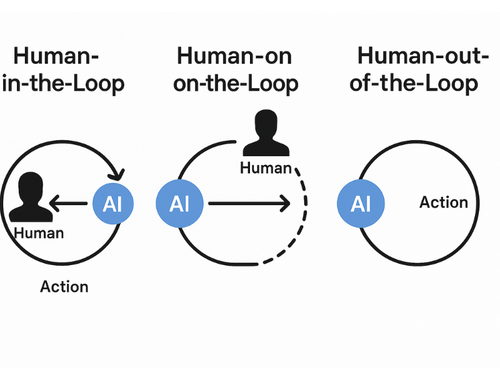
- Human-in-the-Loop (HITL): Requires a human to review and approve an AI’s decision before it takes effect.
- Human-on-the-Loop (HOTL): Allows humans to monitor the system while it runs and intervene to stop or correct actions if necessary.
- Human-out-of-the-Loop (HOOL): The system acts autonomously, relying on humans primarily for ex-post facto auditing and governance.
Why is Human Oversight Important in AI?
Quick answer:
Human oversight in AI-augmented engineering is not a checkbox or a compliance phrase. It is the operational design of which decisions AI makes, which decisions humans make, and where those two interact. In practice, it means defining ownership boundaries before deploying AI tools – not after a production incident forces the question.
For CTOs and engineering directors in financial services, healthcare, and enterprise software, human oversight is not optional framing. It is a legal architecture requirement. High-risk AI systems must have oversight mechanisms built into system design, not described in a policy document sitting in a shared drive.
The practical question is what that looks like inside an engineering workflow.
Human-in-the-Loop Workflows
Quick answer:
Human-in-the-loop (HITL) is the architecture pattern where human judgment is embedded at defined checkpoints in an AI workflow. Not everywhere – that eliminates the speed benefit. At the specific points where AI output is most likely to be wrong in ways that matter.
In AI-augmented engineering, human oversight is most critical at four points.
Security-sensitive code. Authentication logic, encryption, access control, payment processing – every PR touching these areas requires explicit human review before merge, regardless of AI test coverage or quality scores. AI tools generate this code competently. They cannot be accountable for it.
Architecture decisions. AI tools are excellent at implementing known patterns. They are unreliable at choosing between them. Decisions about how components interact, how data flows across system boundaries, or how a service scales – these require a human who understands the system context beyond the immediate file.
Compliance-critical workflows. In regulated sectors, certain code paths directly affect regulatory obligations: data handling under GDPR, audit logging for high-risk AI systems, integrations with core financial or healthcare platforms. AI can generate code for these workflows. A qualified engineer must own the sign-off.
Agentic AI actions in production. When AI agents have write access to production systems – triggering deployments, modifying configurations, executing rollbacks – the stakes are higher than a PR review. These actions require an explicit human approval step, not just a passing test run.
The principle across all four is consistent: AI handles generation, humans own judgment. The implementation skill is defining that boundary precisely enough to be enforced, audited, and understood by everyone on the team.
For teams scaling AI testing automation alongside these workflows – including how AI-generated test coverage interacts with human review requirements – we cover that in dedicated depth elsewhere in this series.
Risk Controls and AI Code Review
This is where governance becomes engineering, not policy.
Effective AI code review is not fundamentally different from traditional code review. Validation, scrutiny, testing, audit – the same principles apply. What changes is the volume and velocity at which those controls need to operate.
The most common failure mode here is not malicious – it is organisational. Governance that lives only in documentation is not governance. It is documentation of intentions.
Tiered review gates
Not every PR needs the same level of scrutiny. A PR generating boilerplate endpoints carries different risk from one modifying a fraud detection model or an authentication service. Tiered gates – where the review requirement scales with the risk classification of the change – allow human oversight to match AI velocity without becoming a bottleneck.
AI-assisted pre-screening, human-final review
AI tools pre-screen PRs for security issues, style violations, and test coverage gaps before they reach the human review queue. Humans make the merge decision. AI prepares the ground.
Explicit escalation paths
What happens when an AI agent encounters an unexpected state in production? What happens when a model output falls outside expected confidence ranges? These are operating conditions, not edge cases. Escalation paths need to be defined in advance – not improvised during an incident.
Audit logging for AI-generated decisions
Organisations deploying AI in high-risk contexts need traceable records: what AI generated, what humans reviewed, and what was approved. We cover the data requirements for this in our article on AI Data Infrastructure and Compliance.
The relationship between human oversight infrastructure and broader AI engineering productivity metrics – including how DORA metrics shift when review processes are scaled to match AI velocity – is a topic we cover in dedicated depth in our piece on AI engineering productivity.
The Regulatory Dimension: What EU AI Act and DORA Require
For engineering leaders operating in EU markets, human oversight in AI systems is not just a best practice. It is a compliance obligation.
The EU AI Act requires that high-risk AI systems include human oversight mechanisms allowing operators to understand, monitor, and intervene in AI decisions. This applies to AI deployed in financial services, healthcare, employment decisions, and critical infrastructure.
DORA adds operational resilience requirements on top: AI systems in financial services must be tested, documented, and recoverable from adversarial disruption. An AI-augmented delivery pipeline in a DORA-regulated institution is not just an engineering asset. It is an ICT system under active regulatory scrutiny.
For enterprises in Germany, the Netherlands, France, and across EU member states, national supervisors such as BaFin are building AI governance expectations directly on top of DORA – with explicit requirements for AI system inventory, management-level oversight, and integration of AI risk into ICT frameworks.
For Swiss enterprises, FINMA’s governance guidance aligns closely with EU standards. Banks and insurers deploying AI in credit decisions, compliance monitoring, or client-facing applications face the same functional human oversight requirements. For Swiss institutions serving EU markets, EU-equivalent compliance applies in practice.
The practical implication: if you are building AI-augmented delivery infrastructure in a regulated sector, human oversight mechanisms need to be in the architecture from day one – not described in a risk register and retrofitted when an auditor asks.
What Happens When Human Oversight Is Missing
The failure modes are not hypothetical. They are patterns that repeat across enterprise AI deployments in financial services, healthcare, and enterprise software in Europe and the US.
Technical debt that compounds invisibly
AI-generated code accumulates across hundreds of PRs. Each looked fine individually. The structural problem is below the surface – architectural choices made by AI tools optimising for the local problem, not the system-wide one. It surfaces six months later as a refactor no one budgeted for and no one can trace cleanly.
Shadow AI in the codebase
Developers using unsanctioned AI tools outside IT governance. Proprietary code entered into public AI platforms. Internal architecture described to consumer LLMs. These are happening in engineering teams right now, in organisations that believe their governance policy is working. We cover the full shadow AI risk profile in our article on Why Enterprise AI Fails in Production.
Accountability gaps at incident
When an AI agent triggers a production failure, the question of accountability needs an answer before the incident, not during it. If that answer is “we’re not sure whose approval covered that deployment,” the human oversight structure was not built.
Compliance exposure in regulated sectors
An AI-generated decision in a credit workflow, a healthcare application, or an insurance system that cannot be traced, explained, or reviewed is a compliance liability right now – not a future risk.
Our article on Enterprise AI ROI covers how compliance cost factors directly into the ROI calculation for high-risk AI.
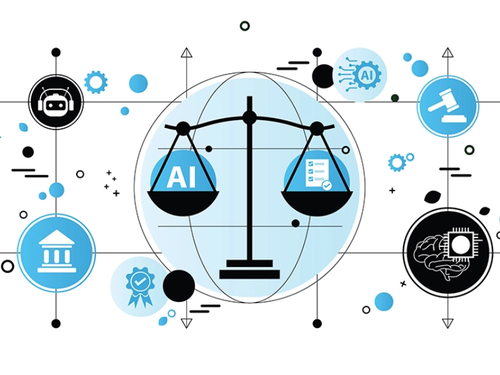
What Leaders Should Do Right Now
For CTOs and engineering directors, here is the sequence that works across enterprise AI deployments in the EU and US.
- Define the boundary between AI-owned and human-owned decisions before deploying more tools. Which modules require explicit human oversight before merge? Which production actions require human approval before execution? Write these as delivery pipeline gates – not policy guidelines.
- Redesign your review process for AI-generated volume. Your current PR review was not built for the volume AI can produce. Before expanding AI access, define tiered review gates, implement AI pre-screening, and set explicit escalation paths for agentic actions.
- Build audit logging into the AI workflow from day one. Every AI-generated PR, every human approval, every AI-assisted deployment decision needs a traceable record. Retrofitting audit infrastructure after the fact is consistently expensive and consistently incomplete.
- Audit the AI tools already in use in your engineering team – including unsanctioned ones. The number of AI tools in active use in most engineering organisations is significantly higher than IT has approved. You cannot govern what you have not inventoried.
- Treat agentic AI with write access to production as a new class of risk. Define approval requirements and incident response procedures before deploying AI agents with write access to production systems – not after something goes wrong at scale.
For a detailed breakdown of how human oversight connects to overall software delivery performance, our AI Software Delivery article covers the full lifecycle from copilot to autonomous systems
How IMT Solutions Supports Governance-First AI Engineering
IMT Solutions works with enterprise organisations across financial services, healthcare, and enterprise software to design AI-augmented engineering environments where governance is built in, not bolted on. Our approach spans the full delivery lifecycle – from defining AI ownership boundaries through building audit infrastructure that meets regulatory compliance requirements.
If you are mapping where your engineering governance sits, or building the infrastructure to make AI adoption safe in a regulated environment, explore our case studies or contact our team to talk through your specific situation.
Frequently Asked Questions
What is human oversight in AI-augmented engineering?
Human oversight in AI-augmented engineering is the operational design that defines which decisions AI makes, which decisions humans make, and where human judgment is required before AI output proceeds. It covers review gates in the delivery pipeline, approval requirements for AI-generated code in sensitive modules, and escalation paths when AI behaviour falls outside expected ranges. Effective human oversight is not just a policy – it is enforced in the delivery pipeline as a set of governance controls that can be audited and demonstrated to regulators.
Why does AI code generation create risk without human oversight?
AI code generation produces code faster than review processes were designed to handle. Without AI code generation creates significant risks without human oversight because models lack contextual understanding, synthesize severe hidden vulnerabilities, and foster false confidence in complex systems. Without human judgment, these flaws seamlessly propagate directly into production environments.
What does the EU AI Act require for human oversight in high-risk AI?
The EU AI Act mandates that high-risk AI systems must be designed and deployed so humans can effectively monitor operations, intervene in real-time, and override or halt the system. This ensures accountability and minimizes risks to health, safety, and fundamental rights
How should engineering teams implement human-in-the-loop workflows for AI?
Engineering teams should implement HITL workflows by classifying the risk level of each code domain – security-critical, compliance-sensitive, or architecturally significant – and defining the review requirement for each tier. High-risk modules require explicit human sign-off before merge regardless of AI test coverage. AI tools pre-screen PRs for quality and security issues; humans make the final merge decision. Escalation paths for agentic AI actions in production need to be defined in advance. The goal is not human oversight of every PR – it is oversight at the points where AI output is most likely to be wrong in ways that matter.