Securing the AI Pipeline:
Zero-Trust Architecture & AISPM
Traditional security was built for systems that behave predictably. AI does not.
A standard application follows fixed logic. If something breaks, security teams can usually trace the code path, patch the vulnerability, and close the incident.
It does not work for AI. AI systems learn from data, adapt to changing inputs, interact with other systems, and produce probabilistic outputs that may look correct even when they are not.
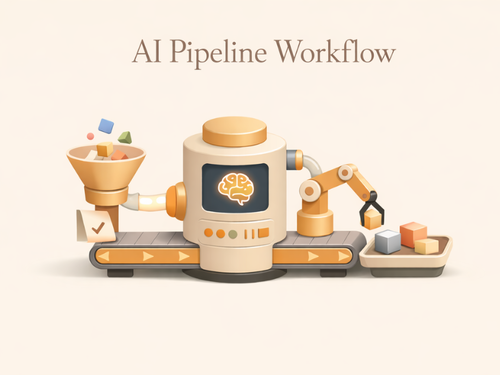
That is why AI pipeline security is now becoming a board-level issue. An AI system’s attack surface is fundamentally different. It is not a static target. It is a pipeline-a sequence of dependent stages where data flows in, models learn, decisions are made, and outputs are consumed downstream. Compromise any single stage, and the damage propagates silently through the rest. An attacker who poisons your training data does not need to touch your production servers. The model does the damage for them.
Across financial institutions in Zurich and Frankfurt, healthcare organisations in the Netherlands and France, and enterprise software firms in the US and the UK, the same gap keeps appearing: AI is treated as a product to be secured at the perimeter, when it is actually a pipeline that requires security at every joint. This article is about closing that gap.
1. Why AI Pipelines Are Uniquely Vulnerable
Quick answer:
AI pipelines are highly vulnerable because they stitch together complex, multi-layered environments-data sources, open-source models, orchestration frameworks, and APIs. Traditional security tools struggle here because AI pipelines act as fluid data pathways, transferring data across trust boundaries and exposing sensitive information without a traditional breach ever occurring.
AI pipelines are vulnerable because they are not one system. They are a chain of systems.
Data ingestion attacks
Before a model learns anything, it must be fed data-from APIs, internal databases, third-party providers, and labelled datasets from contractors. Each source is an attack surface.
If the data entering the pipeline is stale, incomplete, manipulated, or poorly validated, the model will learn from a distorted view of reality. This is data poisoning, and it is particularly difficult to detect because poisoned inputs often look identical to legitimate ones.
Model training and versioning
A model is only as trustworthy as the data and code used to produce it. If the training process is not reproducible, if model versions are not tracked, or if the model registry is poorly protected, the organisation may not know which model made which decision at which time. Under the EU AI Act, high-risk AI systems must technically allow automatic recording of events through logs across the system lifetime.
Deployment and runtime
Once deployed, AI systems interact with users, APIs, databases, and downstream systems. That is where prompt injection, model extraction, excessive permissions, and insecure output handling become serious risks.
OWASP’s Top 10 for LLM applications includes training data poisoning, model denial of service, and supply chain vulnerabilities as key categories, showing how AI risk extends beyond the model itself.
2. What Is AI Security Posture Management (AI-SPM)?
Quick answer:
AI Security Posture Management (ASPM), often referred to as AI-SPM, is a continuous cybersecurity framework designed to monitor, manage, and secure Artificial Intelligence and Machine Learning systems. It protects the entire AI lifecycle-from training data to deployment-against vulnerabilities and AI-specific threats like data poisoning, prompt injection, and model theft
AI Security Posture Management, or AISPM, is the continuous process of discovering, assessing, monitoring, and improving the security posture of AI systems.
It is similar in spirit to cloud security posture management, but focused on AI-specific assets: models, training data, feature pipelines, prompts, inference endpoints, embeddings, agents, and the infrastructure around them.
For enterprise leaders, the value of AISPM is visibility.
Most organisations do not actually know how many AI systems they have in use. They know about the approved models. They may know about the major GenAI tools. But they often miss models embedded in vendor platforms, employee-built automations, experimental notebooks, internal chatbots, and shadow AI workflows.
AISPM helps answer questions that leadership teams increasingly need to ask:
- Which AI models are running in production?
- What data do they use?
- Who has access to them?
- Which APIs expose them?
- Are model outputs drifting?
- Are training datasets changing?
- Are there unusual query patterns suggesting abuse?
- Can we reconstruct a decision six months later?
This is where AI pipeline security becomes measurable. Without AISPM, AI security remains a policy document. With AISPM, security teams can see the actual posture of the AI environment and act before a failure becomes public.
For organisations subject to the EU AI Act’s high-risk requirements, AISPM is not optional infrastructure. The Act mandates automatic logging, continuous post-market monitoring, and the ability to reconstruct AI system decisions on request.
If you haven’t yet read our breakdown of how the EU AI Act classifies risk tiers and what each tier requires, explore our blog.

3. Zero-Trust Principles for AI Infrastructure
Quick answer:
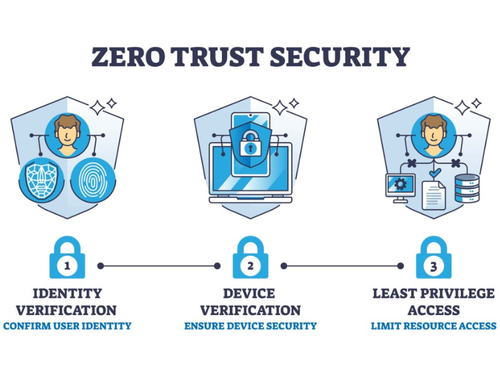
Zero-trust architecture for AI applies identity-first security across every interaction in the AI pipeline. No user, system, or service is trusted by default-even inside the network perimeter. In practice: multi-factor authentication for all AI development environment access, least-privilege permissions for every role interacting with models or training data, micro-segmentation between development, staging, and production environments, and continuous verification of all service-to-service communication within the AI stack.
The phrase “zero-trust” has been heavily marketed. What it means for AI infrastructure is specific.
Multi-factor authentication (MFA) for all AI environment access
Development environments and model registries often carry weaker authentication than production systems, on the assumption that they are lower risk. In an AI pipeline security context, they are higher risk-because they sit upstream of everything else. Every engineer, data scientist, and MLOps team member accessing training infrastructure, model registries, or feature stores should authenticate with MFA.
Least-privilege access for every role
A data scientist validating model outputs does not need write access to training datasets. An inference API does not need access to the model registry. A monitoring service does not need the ability to update model weights. Permissions should be scoped to the minimum required for each specific role and task. This limits blast radius when credentials are compromised.
Micro-segmentation between pipeline stages
Development, staging, and production should be hard boundaries-not porous zones. Model artifacts should travel between them through defined, audited promotion pipelines, not direct access. Engineers working in development should have no access to production systems by default. This is particularly important for Swiss and EU financial institutions under DORA, which requires ICT risk segregation across critical systems.
Continuous verification of service-to-service communication
In a modern AI stack, inference services, data pipelines, model monitoring tools, and feature stores all communicate automatically. That machine-to-machine traffic needs the same verification as human access: authenticated, authorised, encrypted, and logged.
4. Hardening the AI Pipeline: Practical Steps
Quick answer:
Hardening an AI pipeline means applying security controls at every stage: cryptographic integrity checks on training data at ingestion, model versioning with signed artifacts and rollback capability, strict separation between development and production environments, and authenticated, rate-limited APIs for model inference.
Principle is one thing. Implementation is another. Here is where AI pipeline security becomes a concrete engineering function.
Secure data ingestion
Every dataset entering a training pipeline should be validated at ingestion: schema checks, completeness checks, range validation, and cryptographic hashing. Hashes should be stored in an immutable log, enabling verification at any later point that the dataset has not been modified. Third-party data sources should be treated as untrusted by default.
Model versioning and signed artifacts
Every model version – including intermediate checkpoints – should be versioned, hashed, and stored in a model registry with an immutable audit log. Artifact signing enables verification that the model in production is the model that was validated in staging.
Rollback capability is mandatory: when a compromised or degraded model is detected, the ability to instantly revert to a previously validated version is the difference between a managed incident and an operational outage.
Separation of development and production
Development environments should have no direct path to production. Model artifacts should be promoted through automated pipelines with defined approval gates-not via direct engineer access to production systems. This is enforced through infrastructure-as-code, not policy alone.
Secure, authenticated inference APIs
Every endpoint exposing model inference should require authentication, enforce rate limits, log all requests, and return no information about model architecture beyond the inference output. Input validation at the API layer is the last line of defence against prompt injection and adversarial input attacks on deployed models.
Model drift detection
A model trained in 2024 on one data distribution will behave differently in 2026 on a different one. Continuous monitoring for concept drift and data drift is not optional-without it, model degradation is invisible until it produces a failure that is already visible to customers, auditors, or regulators.
For more on how missing drift detection contributes to AI production failures, see our article on why enterprise AI fails in production.
5. Operational Alignment: SOC Integration, Anomaly Detection & Threat Intelligence
Quick answer:
AI security is not a standalone discipline. Effective AI pipeline security requires integration with the organisation’s Security Operations Centre (SOC), feeding AI-specific monitoring signals into existing SIEM infrastructure and threat intelligence feeds. The most common vulnerability is poor visibility: organisations that cannot see what their AI systems are doing cannot detect when those systems are compromised or manipulated-and most organisations currently cannot.
AI security events should look like security events to your SOC. Model output distribution shifts, unauthorised access to training environments, anomalous API traffic patterns, and configuration changes to inference infrastructure should all produce alerts in the same tooling your SOC uses for everything else.
In practice, most organisations run AI monitoring in isolation-separate dashboards, separate teams, no integration with threat intelligence. That separation means AI-specific attack patterns go undetected, incidents are not correlated with broader threat activity, and response timescales are measured in days rather than minutes.
What integration with the SOC requires:
• AI monitoring signals exported to your SIEM (Splunk, Microsoft Sentinel, or equivalent)
• Alert thresholds calibrated against baseline model behaviour, not generic IT baselines
• Incident response playbooks specifically written for AI-related events: data poisoning suspicion, model weight modification, adversarial input detection, and inference API abuse
• Threat intelligence feeds covering adversarial ML techniques – this threat landscape is evolving faster than most security teams’ training
Anomaly detection on model outputs is particularly valuable and underused. A model that begins systematically favouring certain outputs, producing higher-confidence predictions than baseline, or behaving differently on a specific input distribution may have been manipulated.
The broader picture: poor visibility is the most common vulnerability we see across enterprise AI deployments. Not misconfiguration. Not weak access controls. The simple fact that no one is watching what the AI is doing, in production, in real time. SOC integration is what changes that.
6. EU Compliance Tie-Ins: AI Act, NIS2, and Secure Development
The EU AI Act’s security requirements are not aspirational. For high-risk AI systems, the Act requires:
- Support technical documentation, logging, transparency, human oversight, accuracy, robustness, cybersecurity, and post-market monitoring.
- Providers must also establish and document a post-market monitoring system that actively collects and analyses performance data across the lifetime of high-risk AI systems.
The NIS2 Directive extends these obligations to a significantly expanded list of sectors, including digital infrastructure, cloud providers, and managed service providers. Incident reporting timelines are strict: early warning within 24 hours of becoming aware of a significant incident, full report within 72 hours.
Germany’s BaFin has gone further still, publishing its Guidance on ICT Risks in the Use of AI at Financial Entities in December 2025, making explicit that AI systems are ICT systems governed by DORA-including ‘shadow AI’ embedded in purchased software that institutions may not have consciously deployed.
For Switzerland: FINMA Circular 2023/1 and FINMA AI Governance Guidance 08/2024 have brought Swiss financial institutions’ AI security expectations into close alignment with EU requirements. Swiss banks and insurers serving EU clients face effectively the same AI pipeline security obligations as their EU-headquartered counterparts-through both the extraterritorial reach of the EU AI Act and FINMA’s own converging standards.
The practical implication for enterprise leaders:
The question is no longer whether AI pipeline security is required. It is whether your current architecture can demonstrate compliance. The ones that can are the ones that treated AISPM, zero-trust architecture, and pipeline hardening as engineering requirements, not compliance checkboxes.
Conclusion
Traditional security defends a perimeter. AI pipeline security defends a process-one where the data that feeds the system, the infrastructure that trains it, the artifacts that represent it, and the APIs that expose it are all independent attack surfaces.
The organisations ahead of this problem share one characteristic: they built AISPM and zero-trust principles into their AI architecture at the design stage, rather than retrofitting security onto pipelines already in production
If you are assessing your AI pipeline security posture or building toward EU AI Act compliance, explore our case studies or contact the IMT team to discuss your environment.
Frequently Asked Questions
What is AI pipeline security?
AI pipeline security is the practice of protecting the full AI lifecycle, including data ingestion, model training, model storage, deployment, inference APIs, monitoring, and retirement. It goes beyond traditional cybersecurity by protecting AI-specific assets such as training data, model weights, prompts, feature stores, embeddings, and model outputs.
What is AI-SPM?
AISPM stands for AI Security Posture Management. It is a cybersecurity framework designed to continuously discover, monitor, govern, and protect artificial intelligence and machine learning systems throughout their lifecycle
What should an organisation do first to improve AI pipeline security?
Start with an AI asset inventory. List every AI system in production or development: what data it ingests, where it is trained, how it is deployed, and who has access to each component. Most organisations discover that access controls are significantly broader than intended and that monitoring coverage is near zero. For most, the highest-priority first steps are securing training environments with MFA and least-privilege access, implementing cryptographic integrity checks on training data, and exporting AI monitoring signals to the SOC.
Does the EU AI Act require specific AI security measures?
Yes. For high-risk AI systems, the EU AI Act requires cybersecurity measures proportionate to identified risks, automatic logging of operational events, continuous post-market monitoring, and the ability to reconstruct AI decisions on request. These are legal requirements for any organisation deploying high-risk AI that affects EU users, regardless of where the organisation is headquartered.