Digital Transformation Drives AI Scalability
For many years, digital transformation has been viewed as a technology modernization initiative with a relatively clear beginning and end. Organizations defined roadmaps, implemented new systems, and expected rapid improvements in operational efficiency or customer experience. However, as AI increasingly becomes a core capability for decision-making, operations, and competitive differentiation, this approach is proving insufficient.
AI is not a standalone application that can simply be “plugged into” existing environments. Instead, it is deeply dependent on the underlying IT foundation application architecture, infrastructure, data platforms, and cost governance models. When this foundation is outdated, fragmented, and undisciplined, AI struggles to deliver sustainable value. As a result, digital transformation must be redefined, with IT modernization recognized as a long-term organizational capability rather than a one-time project.
IT Modernization as the Foundation of Digital Transformation in the AI Era
Historically, digital transformation initiatives focused primarily on digitizing processes and enhancing user experience. While these efforts delivered measurable benefits, they fall short of what AI demands today. AI requires platforms capable of handling large-scale data, scaling dynamically, and operating reliably over extended periods.
This is where IT modernization becomes central. Modernizing infrastructure, applications, and data platforms allows enterprises to reduce dependence on legacy systems, systems originally designed for stable, predictable environments with limited scalability requirements. In contrast, AI workloads require continuous learning, near–real-time data processing, and seamless integration across multiple systems.

Consider logistics companies deploying AI to optimize delivery routes. When order, warehouse, and transportation data are scattered across outdated platforms, AI models cannot access timely and consistent information. Through IT modernization, enterprises can restructure systems using service-based architectures, standardize data, and establish a robust foundation that enables AI to operate effectively.
Cloud Transformation: A Necessary but Insufficient Step
Within most digital transformation journeys, cloud transformation is often seen as a major milestone. Cloud platforms offer rapid scalability, flexibility, and access to advanced AI services. However, moving workloads to the cloud alone does not guarantee AI readiness.
In practice, many organizations adopt a lift-and-shift approach, migrating existing systems to the cloud without redesigning their architectures. While this accelerates migration timelines, it preserves the fundamental limitations of legacy systems. When cloud outages occur or demand spikes unexpectedly, these weaknesses become immediately apparent.
Recent large-scale service disruptions have demonstrated that cloud platforms only deliver resilience and scalability when paired with redesigned architectures. Aligning cloud transformation with IT modernization enables enterprises to build distributed systems that are fault-tolerant, self-healing, and better suited to increasingly complex AI workloads.

AI-Powered Architecture: Simplicity, Standardization, and Discipline
An effective AI-powered architecture does not imply increased system complexity. On the contrary, AI performs best on platforms that are simple, standardized, and observable. This includes microservices-based designs, consistent APIs, well-defined data pipelines, and comprehensive monitoring capabilities.
When organizations continue to maintain excessive legacy systems, IT environments become increasingly complex and difficult to govern. Each new AI deployment introduces layers of dependencies that slow innovation and increase risk. In such contexts, digital transformation only succeeds when enterprises are willing to fundamentally restructure their systems rather than layering new technologies on top of outdated foundations.
A streamlined AI-powered architecture allows organizations to scale experiments, deploy models faster, and manage operational risks more effectively. More importantly, it enables AI to be deeply embedded into core business processes rather than remaining isolated in pilot initiatives.
FinOps: An Essential Capability for Large-Scale AI Architectures
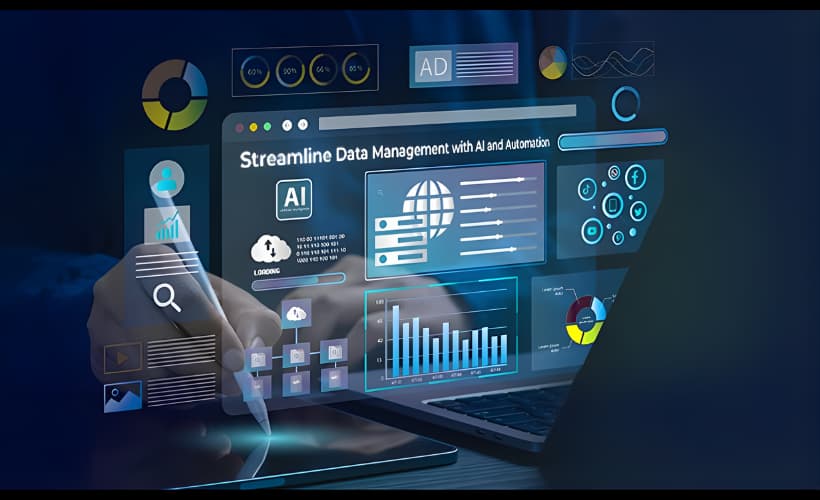
AI workloads consume significant cloud resources, particularly GPUs, storage, and data transfer bandwidth. Without effective governance, costs can escalate rapidly and unpredictably. This is why FinOps has become an indispensable component of modern digital transformation initiatives.
FinOps provides organizations with transparency into AI-related costs by application, model, and business unit. For example, an e-commerce company may accept higher AI spending during peak seasons to deliver personalized customer experiences. However, once demand stabilizes, cost optimization becomes essential to protect margins.
Crucially, FinOps is not about minimizing cloud spend at all costs. Instead, it focuses on optimizing cost relative to business value, enabling data-driven investment decisions and ensuring that AI initiatives remain economically sustainable.
IT Modernization as a Long-Term Organizational Capability
A common misconception is treating IT modernization as a project with a defined endpoint. In reality, AI technologies, data platforms, and cloud services evolve continuously. Organizations cannot modernize once and assume long-term readiness.
From this perspective, digital transformation should be understood as an organizational capability encompassing people, processes, and technology. Successful enterprises maintain multi-year IT modernization roadmaps, executing incremental improvements aligned with long-term business objectives rather than isolated transformation efforts.
Balancing Cloud and On-Prem in Regulated Industries
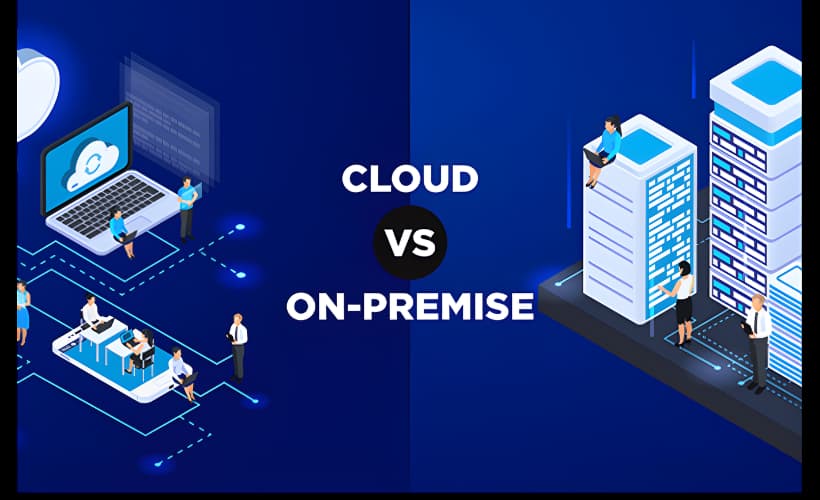
In heavily regulated sectors such as finance, healthcare, and the public sector, compliance requirements and data sovereignty concerns often necessitate retaining AI workloads on-premises. This approach does not conflict with cloud transformation; instead, it reflects a pragmatic balance between control and scalability.
Hybrid architectures are increasingly common, allowing sensitive data to remain in controlled environments while leveraging cloud platforms for scalable AI processing and advanced analytics. This approach reinforces the idea that digital transformation must remain flexible and context-aware rather than driven by a single universal model.
Conclusion
In the AI era, digital transformation is no longer a short-term initiative or a technology slogan. It is a sustained journey in which IT modernization, AI-powered architecture, cloud transformation, and FinOps form the foundation. Enterprises that invest in this foundation are better positioned to scale AI responsibly, control costs, and maintain long-term competitive advantage. More importantly, this foundation enables organizations to respond faster to market changes, regulatory shifts, and emerging technologies without repeated large-scale reinvention.
With extensive experience advising and delivering solutions across multiple industries, IMT partners with organizations to evaluate IT maturity, define pragmatic modernization roadmaps, and design AI architectures aligned with long-term business strategy. Rather than implementing fragmented initiatives, IMT focuses on building sustainable technology capabilities that enable enterprises to adapt to AI-driven change with confidence. By establishing resilient, scalable foundations, IMT helps organizations unlock AI value responsibly and support sustainable enterprise growth. Contact IMT to begin your IT modernization journey today.