Predictive & Analytical AI in Enterprise: Navigating ROI and Risk Reality
The integration of Predictive & Analytical AI in Enterprise is fundamentally redefining how global organizations operate and make strategic decisions in 2026. While Analytical AI focuses on interpreting historical data to understand past performance, Predictive AI acts as a strategic guide, allowing firms to anticipate market shifts and customer behaviors with high accuracy. Implementing this technological duo is not just about automation, but about maximizing Return on Investment (ROI) through data-driven choices while establishing a robust risk management framework. Successful deployment requires a balance between machine computational power and human judgment to ensure long-term economic value and regulatory compliance in a complex global landscape.
1. What Is Predictive & Analytical AI in Enterprise?
At its core, Predictive & Analytical AI in Enterprise is the strategic application of advanced machine learning and deep learning to address specific business challenges. Unlike traditional software that operates on rigid “if-this-then-that” rules, enterprise artificial intelligence learns from vast datasets to identify patterns and make probabilistic guesses. In sophisticated markets like Switzerland, these tools are no longer optional experiments but essential infrastructure for building customer trust and managing risk. Understanding that AI regulates what the technology does rather than the technology itself is the first step toward a compliance-ready and high-ROI deployment.
The Core Distinction: Rules-Based vs. Pattern-Based
The key distinction between conventional software and Predictive & Analytical AI in Enterprise is the shift from following human – defined rules to identifying data- driven patterns. Standard software execution is deterministic, it does exactly and repeatly what the code dictates every single time. However, AI learns from experience. For instance, by analyzing millions of fraudulent transactions, a machine learning model learns to recognize the subtle markers of fraud without a human explicitly defining every possible scenario.
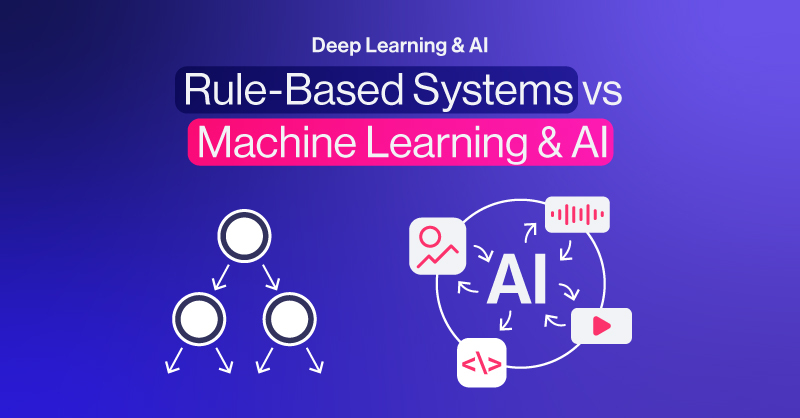
This powerful ability to “learn” from data without constant human programming is what makes AI exceptionally potent for managing complex, dynamic operations such as risk management and customer service, but it also fundamentally necessitates a significantly different governance approach than traditional IT systems.
The Enterprise Reality in 2026
In 2026, Enterprise AI is characterized as a multifaceted ecosystem of diverse rather than a single technology. It involves everything from statistical models that have existed for decades to advanced agentic systems now entering production. Organizations must distinguish between these tools because of the EU AI Act (Regulation 2024/1689) AI based on its specific use case and impact on individuals. Currently, many organizations struggle with this distinction, a study of over 100 enterprise AI systems found that 40% were unclear on their risk classification. Resolving this uncertainty is critical for any organization seeking to avoid expensive regulatory problems.
Operational Feature |
Traditional Software |
Predictive & Analytical AI |
|---|---|---|
Operational Logic |
Rules-based (If-Then) | Pattern-based (Probabilistic) |
Primary Advantage |
High consistency & predictability | Scalability & complex pattern recognition |
Typical Failure Mode |
Logic bugs or human error | Quiet failure through bias or drift |
The 2026 ROI-Risk Balancing Act
In 2026, the successful deployment of Predictive & Analytical AI in Enterprise is defined by a shift from rigid rules-based systems to adaptive, pattern-based intelligence. While these technologies offer a significant roadmap for maximizing ROI through demand forecasting and operational efficiency, they simultaneously introduce “silent” risks such as data drift and algorithmic bias. Organizations, particularly in high-stakes markets like Switzerland, must now navigate the strict classification tiers of the EU AI Act—where financial and HR systems are often deemed “High-risk”—requiring documented governance and human-in-the-loop oversight to transform compliance from a legal burden into a strategic competitive advantage.
2. Maximizing ROI Strategy with Predictive & Analytical AI in Enterprise
Strategic Insight: Shifting from AI Users to Decision Architects
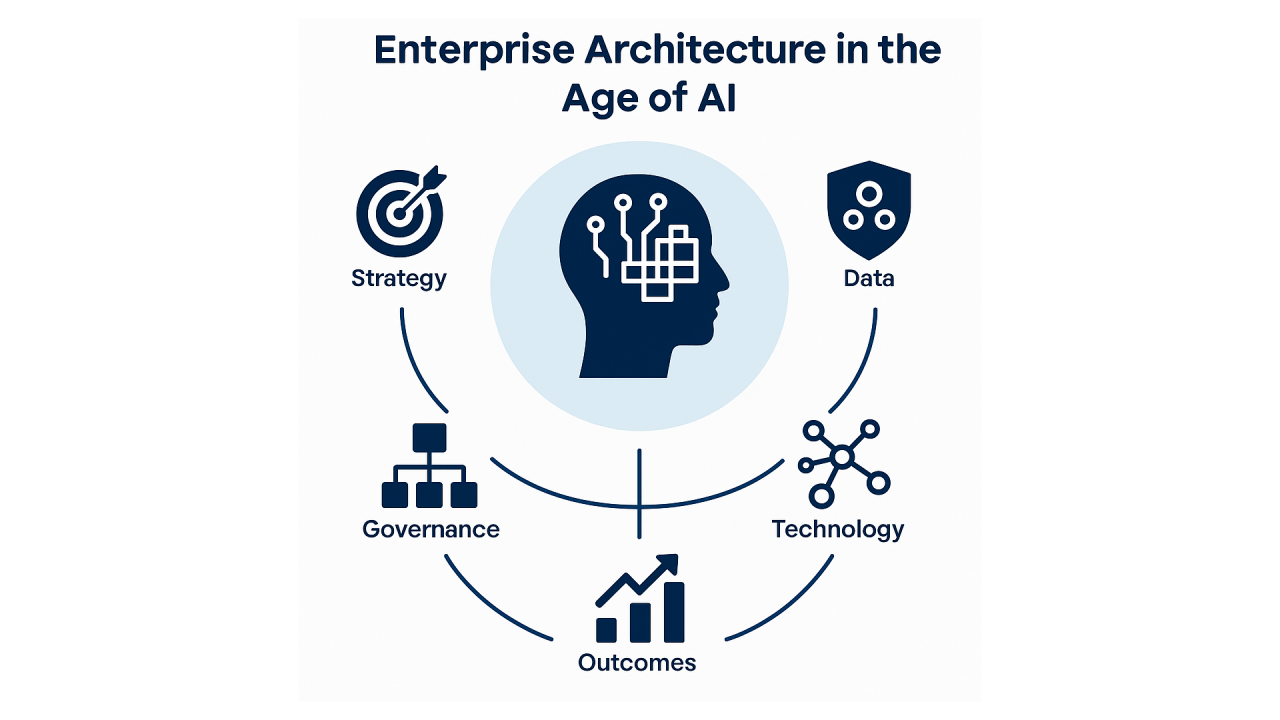
To maximize ROI with Predictive & Analytical AI in Enterprise, leaders must evolve into “Decision Architects” who design workflows where AI handles pattern recognition while humans retain authority over high-stakes judgment. True revenue growth in 2026 stems from reimagining business models—using Analytical AI to pinpoint deep inefficiencies and Predictive AI to redirect capital toward future-growth opportunities. This leadership-driven transformation ensures that AI informs strategy without overriding accountability, moving organizations past simple productivity gains toward genuine, scalable business expansion.
ROI is not generated solely by the algorithm but by how leaders guide and make decisions alongside the machine. Successful strategies focus on redirecting human attention from low-level pattern recognition to high-level judgment and strategic planning. By integrating AI into the core business strategy, organizations can achieve faster decision-making and operational optimization while maintaining human accountability for the outcomes. This transition from technology-driven adoption to leadership-driven transformation is the defining capability for competitive organizations in 2026, you can find more information about AI Leadership in our piece AI Leadership: When Leaders Meet Artificial Intelligence.
The Strategic Role of the Decision Architect
To bridge the gap between AI outputs and business value, leaders must adopt the role of a “Decision Architect”. This role involves designing decision-making processes that align AI capabilities with organizational goals. Instead of letting the AI override human responsibility, a Decision Architect defines clear boundaries for AI recommendations and ensures human-in-the-loop mechanisms are active for high-stakes choices. In finance, for example, while AI can analyze vast transaction volumes for market volatility, a human leader must provide the context of regulatory changes or long-term vision to make the final strategic move.
Moving Beyond “Using AI” to “Governing AI Well”
While two-thirds of organizations now report productivity gains from AI, only 20% are seeing genuine revenue growth. This discrepancy suggests that most enterprises are merely using AI to perform the same tasks faster, rather than rethinking their operational models. A high-ROI strategy involves reimagining the business. This means using Analytical AI to identify where the business is currently inefficient and applying Predictive AI to redirect resources toward future growth opportunities. The organizations that thrive are those that have moved past the general category of “AI” to clearly define what they have deployed and who is accountable for it.
3. Real-World Applications of Predictive & Analytical AI in Enterprise Fintech
Fintech Benchmark: The Standard for Operational Resilience
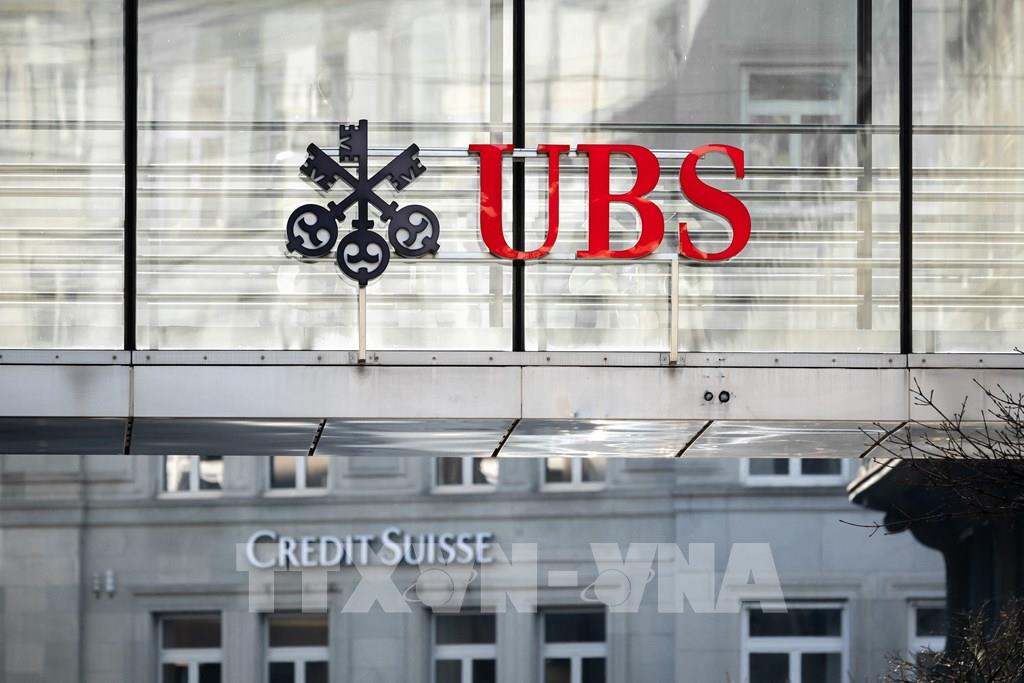
In the global Fintech sector, Predictive & Analytical AI in Enterprise serves as the primary engine for real-time fraud detection and anomaly monitoring across billions of daily transactions. The 2026 UBS and Credit Suisse integration acts as the industry’s gold standard, proving that massive IT migrations and surging transaction volumes can be secured through rigorous regulatory cooperation and advanced AI audit controls. By aligning with FINMA and DORA standards, fintech leaders use AI to preemptively identify system failures and cyberattacks, significantly cutting compliance preparation time and securing long-term institutional trust.
Currently, Swiss banks and global insurance firms are currently utilizing these tools to scan billions of transactions per second to detect anomalies and stop fraud in real-time. Beyond security, AI improves credit scoring models by identifying promising clients who might be overlooked by traditional systems due to limited financial history. The convergence of international standards, such as DORA in the EU and FINMA guidance in Switzerland, is now forcing a unified approach to AI governance across the global banking sector.
The UBS & Credit Suisse Integration: A Reference Point
The merger of UBS and Credit Suisse stands as one of the most complex integrations in banking history. On March 18, 2026, UBS completed the transfer of 1.2 million global accounts onto its infrastructure. This operation required over 80,000 individual tests and 132,000 hours of specific training. Payment volumes on the UBS platform surged by 25% to 3.1 million transactions per day. This integration serves as the industry reference point for large-scale bank IT migration, proving that such complexity can be managed through extreme planning rigour and explicit regulatory cooperation.
Advanced Anomaly Detection and Real-Time Monitoring
Fintech leaders like PayPal and Stripe utilize Predictive & Analytical AI in Enterprise to monitor the health of entire transaction networks in real-time. Small drops in processing speed or sudden surges in regional traffic can signal cyberattacks or system failures. AI identifies these early warning signs hours before human intervention is possible. Similarly, Swiss institutions use AI Call Analyzers to monitor 100% of customer calls, improving first-call resolution by 25% and automatically flagging compliance deviations. These automated audit controls significantly reduce the time required for regulatory preparation.
4. Navigating the Risks of Predictive & Analytical AI in Enterprise
How to manage your Predictive & Analytical AI risks ?
Managing Predictive & Analytical AI in Enterprise risks is a vital leadership priority because these systems often fail silently through data drift or historical bias. Unlike traditional software bugs, AI distortions are invisible until they appear in audits. Enterprises must inventory all deployments, including unauthorized “shadow AI” to ensure accurate risk classification. Organizations that balance high-performance modeling with verifiable accountability transform security from a compliance burden into a strategic asset.
Under the EU AI Act, most financial AI applications, such as credit scoring and insurance pricing, are classified as “High-risk,” triggering strict compliance mandates. Non-compliance carries severe financial penalties, with fines reaching up to €35 million or 7% of global annual turnover. Therefore, organizations must balance high-performance models with verifiable accountability to avoid legal and reputational damage. You can find and read more about EU AI Act Compliance in our EU & Global AI Regulations for Enterprises: Risk Classification & What to Do Next piece.
The Paradox: “Your model is accurate – but still making the wrong decisions.”
A critical risk of Predictive & Analytical AI in Enterprise is the “data-correct but contextually-wrong” paradox. A model may perform perfectly in a controlled environment based on years of historical data but fail in the real world because it cannot foresee sudden political crises or global pandemics. Because AI lacks true understanding and emotional intelligence, it cannot replace human judgment in complex or ambiguous situations. This is why human-in-the-loop models are essential; they ensure that AI supports decision-making while humans retain ultimate authority and responsibility for the outcomes.
Mapping AI Use Cases to EU AI Act Risk Tiers
The EU AI Act uses a risk-based approach to classify AI systems based on their use case rather than the underlying technology. An AI system used for CV screening or credit scoring is classified as High-risk, requiring documented risk management, human oversight, and audit trails. Conversely, a customer service chatbot might only fall into the “Limited risk” category, requiring simple transparency disclosures. It is vital for enterprises to inventory all systems—including “shadow AI” tools used without IT approval—to ensure each one is classified correctly before the 2026 high-risk enforcement deadlines arrive.
Use Case |
EU AI Act Risk Tier |
Compliance Requirement |
|---|---|---|
Credit Scoring |
High-risk | Risk management & human oversight |
CV Screening |
High-risk | Data governance & technical docs |
Customer Chatbot |
Limited risk | Disclosure of AI interaction |
Spam Filters |
Minimal risk | No additional obligations |
5. The Global Future of Predictive & Analytical AI in Enterprise
The 2026 Roadmap: From Prediction to Agentic Action
The enterprise AI landscape has shifted from simple predictive models to autonomous “agentic” systems capable of executing multi-step workflows in finance and logistics without constant human intervention. While these systems plan and interact with external environments independently, their complexity introduces risks of large-scale downstream failure, making “Trustworthy AI” a global priority. Aligning with the EU AI Act provides a foundational framework for global organizations to satisfy overlapping requirements in the US and Asia, transforming AI from a basic support tool into a core strategic partner for sustainable, cross-border digital growth.
By early 2026, these agentic systems have transitioned from experiments to full production deployments, handling complex tasks in compliance, logistics, and finance. While technology evolves at a machine speed, the focus of global leaders is shifting toward “Trustworthy AI” through international collaboration and common security standards. Businesses that master these advanced security technologies and achieve rigorous compliance today will hold a strategic competitive advantage in the next decade.
The Rise of Agentic and Autonomous AI
Agentic AI represents the newest and most consequential category of enterprise tools. These systems do more than just predict; they take goals and act on them by planning workflows and accessing external systems. For instance, a financial institution might use agentic AI to execute multi-step compliance workflows autonomously. In 2025, 44% of companies were assessing these tools, but by 2026, they had become core to many operations. However, these systems also create failures at scale, as they can execute errors across multiple downstream systems before a human intervenes, making accountability a critical unresolved question.
Global Regulation Comparison: EU, US, and Asia
The EU AI Act is the most comprehensive regulation currently in force, serving as a global benchmark. In the United States, there is no federal equivalent law as of 2026, with regulation remaining sector-specific (e.g., FDA for medical devices or CFPB for credit decisions). Meanwhile, China has moved fast with generative AI regulations and mandatory algorithm registrations. For global organizations, applying compliance around the EU AI Act provides a strong foundation that satisfies many overlapping requirements in other jurisdictions, acting as a “highest common denominator” for planning.
6. Conclusion: Building a Compliance-Ready AI Strategy
The effective deployment of Predictive & Analytical AI in Enterprise is a story of balance between technology and responsibility. ROI is not a byproduct of the software alone, but a result of a strategy that combines analytical power with human ethical insight. Organizations that thrive in 2026 are not just “using AI”—they are governing it well by knowing exactly what they have deployed, what it does, and who is accountable for it.
At IMT Solutions , we have spent over 17 years building AI systems for BFSI and enterprise clients, where technical expertise and compliance are designed together from day one. Whether you are mapping your AI landscape or planning your next deployment, we help ensure your systems are not just accurate on paper, but also deliver measurable impact on your daily operations. Contact us today to learn how we can support your AI journey.
7. FAQ: Predictive & Analytical AI in Enterprise
What is the simplest definition of enterprise AI?
Enterprise AI is the application of AI technologies, like machine learning and NLP, to automate processes, improve decision-making, and create new business products. It integrates into organizational data and operates within specific regulatory contexts.
Which AI types are classified as high-risk under the EU AI Act?
The Act classifies systems by use case, not technology. High-risk systems include those used in credit scoring, insurance pricing, biometric identification, employment decisions, and critical infrastructure.
How does Switzerland fit into EU AI Act compliance?
Though not an EU member, Swiss enterprises serving EU markets are within the Act’s scope. FINMA has already requested AI governance disclosures aligned with EU standards, and the Swiss Federal Council is developing mirrored national regulations.