MLOps & Automated Documentation: Meeting the AI Act’s Logging Requirements
Your notebook can’t be your audit trail. Build pipelines that document themselves.
That’s not a productivity tip. It’s a legal requirement. Article 12 of the EU AI Act mandates that high-risk AI systems must technically allow for the automatic recording of events – logs that capture what the model did, when it did it, on what data, and under whose oversight. The emphasis is on automatic.
The gap between how most teams currently document their AI pipelines and what the EU AI Act requires is significant. The good news is that modern MLOps platforms close that gap – if they are configured and used correctly.
This article covers what Article 12 requires, where manual documentation breaks down, and how MLOps tooling can turn compliance artefacts from an afterthought into a built-in output of every pipeline run.
Quick answer:
Article 12 of the EU AI Act requires high-risk AI systems to automatically record events – inputs, outputs, model versions, timestamps, human override events – in a tamper-evident log held for regulatory inspection. Manual documentation cannot scale to continuous deployment cycles. Modern MLOps platforms (MLflow, Kubeflow, KitOps, DataRobot) automate experiment tracking, model versioning, and audit log generation as pipeline artefacts. For organizations operating in the EU, Switzerland, the US, or any jurisdiction supplying AI to EU-facing deployments, building compliance documentation into the CI/CD pipeline is now an engineering requirement, not a paperwork exercise.
1. Why Manual Documentation Can’t Scale
Quick answer:
Manual documentation fails to scale because it relies on human effort, tribal knowledge, and static, disconnected systems that cannot keep pace with increasing complexity and volume. As organizations grow, manual processes become fragmented, inconsistent, and error-prone, turning documentation into a bottleneck rather than a resource.
There is a version of AI documentation that used to work: a data scientist maintains a model card, a team keeps a shared log of experiment results, and a project manager compiles a report before each major release. For a model that ships once a year and rarely changes, that approach is manageable.
That is not how AI systems are deployed in 2026.
Enterprise AI systems – particularly in financial services, healthcare, and HR technology – are retrained on new data, fine-tuned, and updated in production on cycles that can run weekly or faster. Every update changes the model’s behavior. Every change is potentially a new compliance event under the EU AI Act, because the Act’s logging obligation does not apply just at initial deployment: it applies continuously, across the operational lifetime of the system.

The specific problems with manual documentation at this cadence:
- Context Decay and Outdated Information: Manual logs depend on someone remembering to write something down. In fast-moving development cycles – especially when teams are distributed across time zones, as is common in offshore engineering setups – coverage becomes inconsistent precisely when development velocity is highest.
- Version drift. A manually maintained model card describes the model as it was at the time someone last updated the card. If retraining happened last Tuesday and the card was last edited three months ago, the documentation describes a system that no longer exists. Regulators do not accept historical documents that don’t match the live system.
- Inference-level gaps. Article 12 requires logs of inference events – not just training documentation. Every time a high-risk AI system makes a decision that affects a person (a credit score, a hiring recommendation, a diagnostic flag), that event must be logged with sufficient detail to reconstruct it later. There is no manual process that reliably captures this at inference scale.
- Human oversight evidence. The AI Act requires evidence that human oversight mechanisms are not just designed but actually used. When a human reviewer overrides an AI decision, that override needs to appear in the log. Manual processes produce no evidence of any of this.
2. What Logging & Documentation Obligations Require
Importance of Technical Documentation
Quick answer:
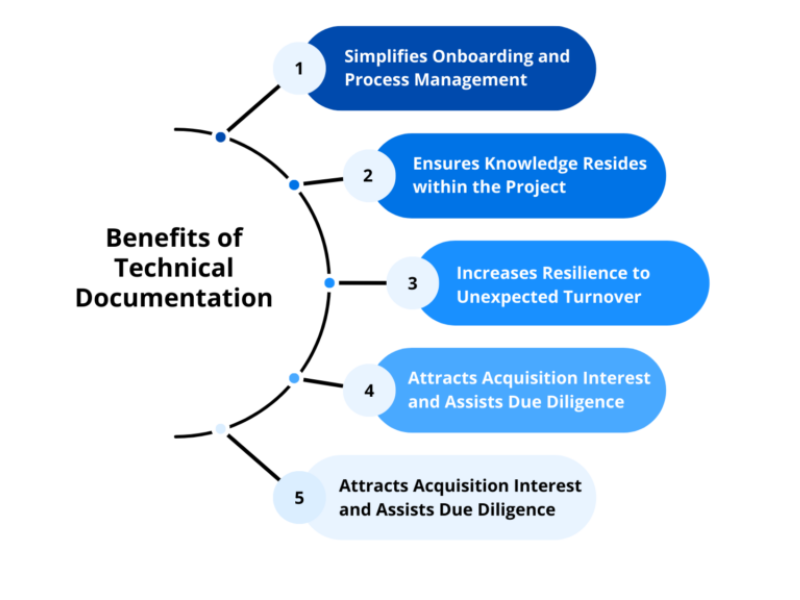
Technical documentation is crucial for ensuring that users, developers, and stakeholders can effectively understand, use, and maintain complex products or systems. It serves as a centralized knowledge base that improves user experience, accelerates onboarding, reduces support costs, and ensures consistency in development.
Technical documentation (Article 11) covers what the system is: architecture diagrams, training methodology, dataset descriptions including sources and bias assessments, evaluation metrics and test results, known limitations, and risk management findings. This documentation must be provided before conformity assessment and kept current throughout the product lifecycle.
Event logs (Article 12) cover what the system does in production: inputs received, outputs generated, operational anomalies, model version in use at each decision point, data inputs at inference time, and any override or intervention by a human operator. For certain high-risk categories – AI in law enforcement, critical infrastructure, and biometric systems – logs must be retained for periods ranging from six months to three years depending on the category.
Your compliance posture needs two automated pipelines running in parallel. One that tracks model development (experiment tracking, version control, evaluation logging). And one that tracks model operation in production (inference logging, anomaly detection, human intervention records).
Neither of these is something your engineering team can maintain manually across a growing model portfolio. And neither is something you want to build from scratch.
Switzerland and logging obligations:
FINMA‘s AI governance guidance closely mirrors EU AI Act requirements, and Swiss financial institutions providing AI-assisted services to EU clients are directly in scope for Article 12. The Swiss Federal Council’s national AI framework explicitly references EU logging and auditability standards. For Swiss banks, insurers, and healthcare technology providers, Article 12-compliant logging is a dual obligation: EU-facing deployments under the Act, and FINMA-aligned governance for domestic operations.
3. The Role of MLOps: Turning Pipelines into Compliance Engines
MLOps already solves most of the logging and documentation problems that Article 12 creates. The challenge is that most organizations have not explicitly connected their MLOps tooling to their compliance requirements. They are running the machinery without using the output.
A well-configured MLOps pipeline provides:
Experiment tracking
Every training run is logged with its configuration, dataset version, hyperparameters, and output metrics. No run exists only in a local notebook.
MLflow, the most widely adopted open-source experiment tracking tool, logs this at the run level with no additional developer effort once the integration is in place.
Model registry and versioning
Every model version is catalogued with its lineage – which data, which training code, which evaluation results produced it. Deployment history is auditable.
Automated artefact generation
Modern MLOps platforms can generate compliance artefacts automatically at defined pipeline stages. A model card is generated from the training run metadata. An evaluation report is produced from test set results. These are not documents a team produces before an audit – they are outputs the pipeline produces on every run.
Production monitoring
Inference requests, predictions, latency, and drift metrics are logged continuously. Anomalies trigger alerts rather than being discovered through customer complaints.
4. Tools Comparison: MLOps Platforms and Compliance Fit
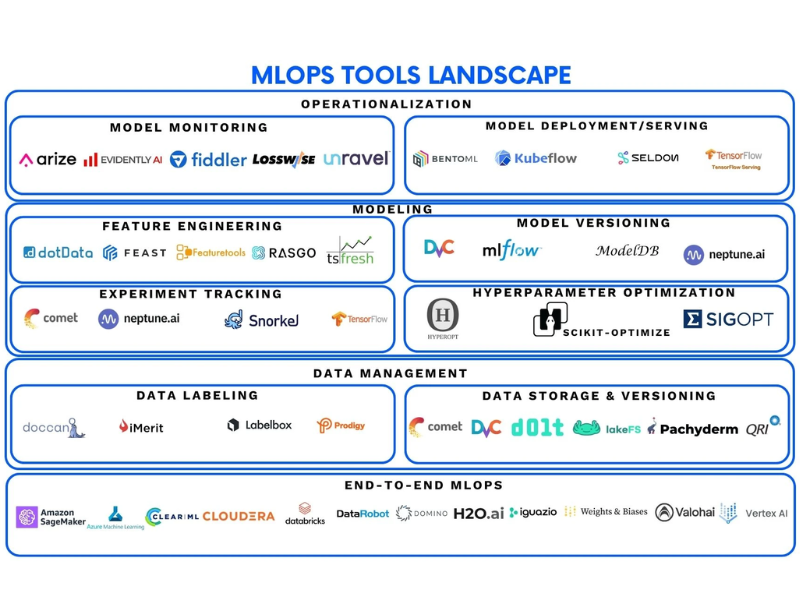
Here is how the main platforms compare across the capabilities that Article 12 and broader EU AI Act compliance require:
| Tools | Strengths for Compliance | Watch Points |
|---|---|---|
| MLflow (open-source) |
|
|
| Kubeflow (open-source) |
|
|
| KitOps |
|
|
| DataRobot (commercial) |
|
|
| Comet ML (commercial) |
|
|
| Weights & Biases (commercial) |
|
|
5. Best Practices: Log Architecture, Retention, and EU Alignment
Log what matters, with structure
Unstructured logs are nearly impossible to query during an incident investigation. Define a schema for your AI event logs – timestamp, model version, input hash, output, confidence score, any anomaly flags – and enforce it across all production systems. Structured logs are the difference between an audit that takes days and one that takes hours.
Pseudonymise personal data in logs
If your high-risk AI system processes personal data at inference time – as credit scoring, hiring, or healthcare AI almost certainly does – raw inference logs will contain personal data. That creates a GDPR obligation on top of the AI Act requirement. Pseudonymise or tokenise personal identifiers in logs at the point of capture and manage the key separately. This satisfies both frameworks simultaneously without losing the ability to reconstruct decisions for legitimate audit purposes.
Encrypt logs at rest and in transit
This is baseline security hygiene that is also implicitly required by the data governance obligations in both the AI Act and GDPR. Logs containing training data provenance or inference records are sensitive. Treat them accordingly.
Enforce retention policies aligned with EU requirements
Article 12 retention requirements vary by AI system category. For most high-risk AI outside of law enforcement, a minimum of five years is a defensible baseline. Build retention policies into your log storage architecture – automated archival and deletion, not manual cleanup – and document those policies as part of your technical documentation package.
Version everything together
Model version, data version, and pipeline configuration should be logged together at each deployment event. If you cannot answer “which version of what data produced which model version that was live on this date,” your audit trail has a gap.
6. Implementation Checklist: Integrating Documentation into Your Development Cycle
ALT: MLOps compliance checklist – Declaration of Conformity automation and pipeline documentation workflow
The goal is a pipeline where documentation is generated, not written. Here is how to move from a manual-first to a pipeline-first compliance posture:
- Classify your AI systems against the EU AI Act risk tiers. Before configuring anything, confirm which systems fall into the high-risk category. Mixed classification is common – the same underlying model may be high-risk in one deployment context and minimal-risk in another.
- Instrument training pipelines with experiment tracking from day one. MLflow or equivalent should be integrated at project initiation, not added before the first audit. Every training run should log hyperparameters, dataset version (via DVC or equivalent), evaluation metrics, and the environment hash.
- Set up a model registry with approval workflows. No model should move to production without a registry entry. The entry should capture: who approved the promotion, which evaluation results justified it, and which version of the technical documentation was current at deployment.
- Add compliance gates to your CI/CD pipeline. Define automated checks that must pass before a model advances: bias evaluation within acceptable thresholds, required artefacts present (model card, evaluation report, data summary), logging infrastructure verified active.
- Implement inference-level logging in production. Configure your serving infrastructure to write a structured log entry for every inference event. Define and enforce the schema – model version, pseudonymised inputs, output, timestamp, human action if applicable – before going live.
- Automate the Declaration of Conformity as a pipeline artefact. The Declaration of Conformity required for high-risk AI should be generated from pipeline metadata – model version, training data summary, evaluation results, risk management measures – rather than written manually. Several compliance tooling providers now offer DoC template automation integrated with MLflow and Databricks.
- Define and automate retention schedules. Configure log storage with automated lifecycle policies: active retention for the defined period, automated archival after a defined interval, documented destruction records at end-of-retention.
- Run a tabletop audit exercise before regulators do. Simulate a regulatory inspection: pick a specific inference event from three months ago and attempt to reconstruct it in full – the input data, the model version, the output, and any human actions taken. If you can’t do it cleanly, your logging is not yet compliant.
Solution
Article 12 is, in practice, an engineering specification. It describes what a logging system must be able to do. MLOps platforms already provide most of the technical capability – experiment tracking, model versioning, artefact generation, inference logging.
The work is connecting that capability explicitly to compliance requirements, configuring the right schemas, and closing the gaps in inference-level and human oversight logging that most current implementations leave open.
The pipeline that documents itself is not a distant ideal. It is a configuration and architecture decision that engineering teams can make now, with tooling that already exists. The deadline is clear. The requirement is specific. The tooling is there.
IMT Solutions helps enterprises across Switzerland, the EU, and the US design MLOps infrastructure that produces compliance artefacts as a standard pipeline output – from experiment tracking and model registry setup through to inference logging and automated documentation. See our case studies or Contact IMT Solutions to discuss how to close your Article 12 compliance gap.
Frequently Asked Questions About MLOps Compliance
Why Manual Documentation Can’t Scale
Manual documentation fails to scale because it relies on human effort, tribal knowledge, and static, disconnected systems that cannot keep pace with increasing complexity and volume. As organizations grow, manual processes become fragmented, inconsistent, and error-prone, turning documentation into a bottleneck rather than a resource.
Is MLOps the future?
Yes, we can say that. As more businesses adopt AI and ML, MLOps is going to be key to scalable, reliable and efficient machine learning.
How does MLOps compliance interact with GDPR requirements?
GDPR and the EU AI Act create overlapping obligations for AI systems processing personal data. GDPR restricts what personal data can be retained and for how long. Article 12 requires event logs that may include personal data in the inference inputs. The resolution is pseudonymisation: log the information necessary to reconstruct the decision, but in a form that does not directly identify individuals. The pseudonymisation key is held separately, accessible only for specific regulatory or legal purposes. This requires deliberate log schema design – it cannot be bolted on after the logging infrastructure is built.
Which MLOps tool is best for EU AI Act compliance?
No single tool covers all requirements. Most compliance-ready stacks combine MLflow or Comet ML for experiment tracking and model registry, Kubeflow or a comparable orchestrator for pipeline management, and a dedicated monitoring layer for production. Commercial platforms like DataRobot bundle more of this together and add compliance reporting features that are useful in regulated sectors. The right choice depends on your existing infrastructure and team maturity.