GenAI & Conversational AI Security: Solving the Hidden Crisis
Entering 2026, the rapid adoption of large model languages (LLMs) and AI chatbots has triggered a hidden crisis regarding governance vulnerabilities in GenAi & Conversational AI that most businesses are currently overlooking. While these tools are revolutionizing productivity and enabling businesses to achieve superior growth, they often operate within a “governance vacuum,” leading to unintentional data leaks and the exposure of proprietary secrets. Addressing this crisis requires a shift from a model-centric thinking to a governance-first architecture, integrating real-time monitoring and strict adherence to global regulations such as the EU’s AI Act. This article will help you explore AI security risks and provide roadmaps for securing Conversational AI and Document AI workflows without stifling technological innovation.
1. Understanding the Vulnerabilities in GenAI & Conversational AI Security
Understanding the vulnerabilities in GenAI & Conversational AI Security
The potential crisis in GenAI and Conversational AI security stems from the inherent nature of machine learning languages (LLMs), namely their ability to collect and expose sensitive information. Unlike traditional IT threats, AI vulnerabilities often manifest silently through rapid data leaks or manipulation. To address this, businesses now need to implement robust authentication and data masking layers to eliminate personally identifiable information (PII) before it infiltrates AI models. In key markets like Switzerland, securing these conversational interfaces is a top priority, essential for maintaining organizational trust and avoiding severe financial penalties related to non-compliance with regulations.
The Threat of Shadow AI and Unauthorized Tools
One of the most concerning risks currently facing organizations or businesses is “Shadow AI.” The unauthorized use of AI tools by employees not under the management or supervision of the IT department leads to cybersecurity risks and the leakage of internal company information, creating security vulnerabilities. A study published in 2023 and updated in 2024 and 2025 by Cyberhaven showed that 11% of data employees paste into GPT chat is classified as confidential/sensitive data, approximately 4-5% of surveyed employees reported having pasted confidential company data into GPT chat at least once, and the most commonly pasted data includes internal information, source code, customer data, and project plans. This potential vulnerability often goes undetected until a serious compliance incident occurs, highlighting the need for robust security policies for Gen AI and Conversational AI.
Data Pipeline Failures and Stale Inputs
AI security is only truly robust when the input data is solid. Errors occurring in the data processing process, such as outdated data, unvalidated input data, or data poisoning, are common causes of AI failures in businesses. For example, if a model is used to analyze customer sentiment or financial valuation but the information provided is outdated, its output will be systematically flawed. Without proactive monitoring at the data ingestion stage, these discrepancies can spread across systems, creating “hidden” errors that are difficult to trace without an established audit framework. You can explore more information about why Enterprise AI fails in Production in our article.
2. Securing LLMs and Chatbots by GenAI & Conversational AI Security
Securing your GenAI
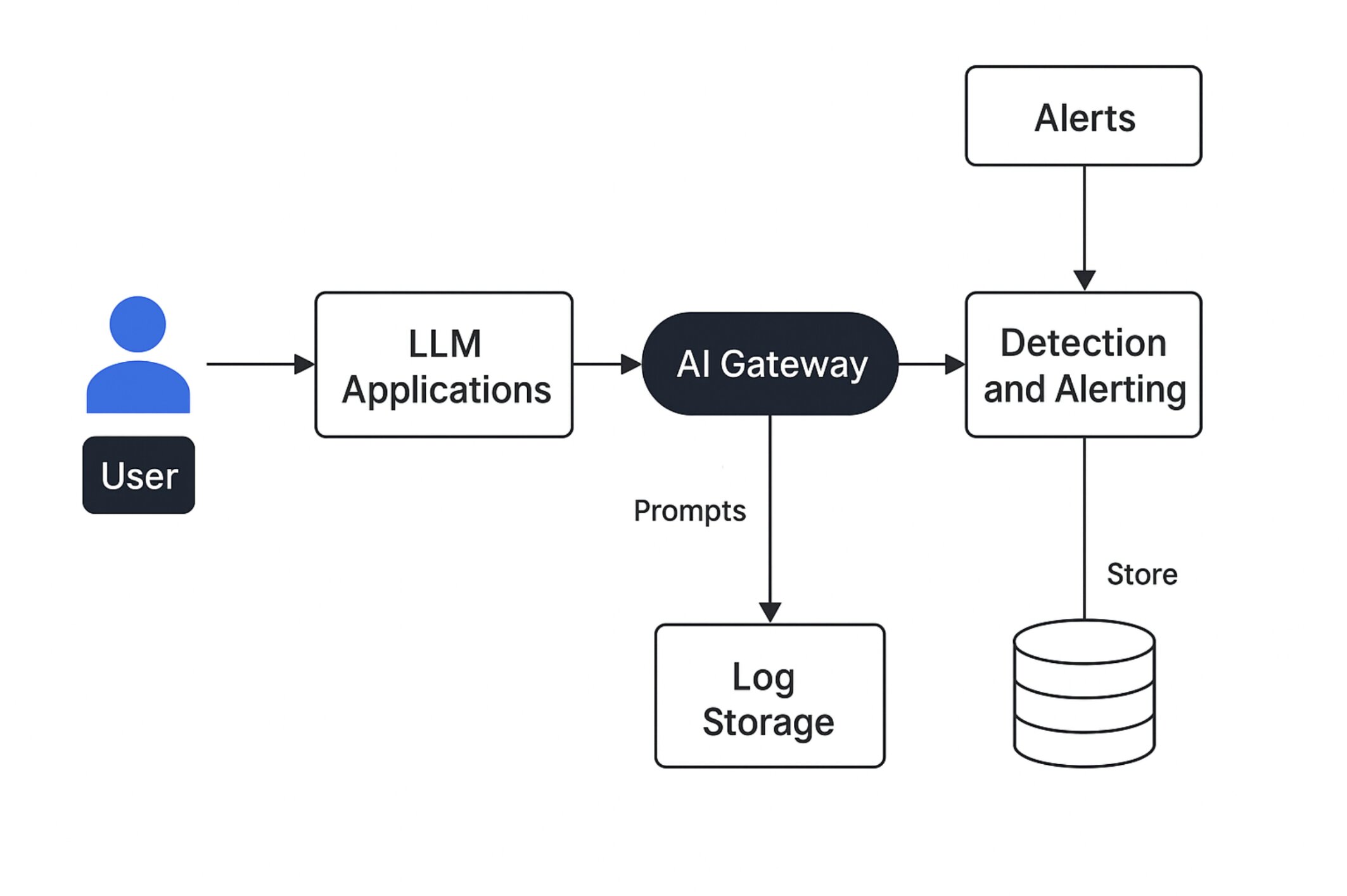
Securing Large Language Models (LLMs) and chatbots via GenAI & Conversational AI requires a tight combination of real-time data monitoring and proactive defense mechanisms. Businesses and organizations need to protect their AI interfaces from “Prompt Injection” attacks, where malicious actors attempt to bypass security filters to extract restricted data. By implementing “Secure Gateway” layers, businesses can verify every query and response, ensuring the system remains operational for its intended purpose. This approach is crucial for global leaders who must balance high-performance automation with the ethical AI standards required by modern governance frameworks.
Defending Against Prompt Injection and Jailbreaking
As Conversational AI becomes the primary user touchpoint, attackers are finding ways to “jailbreak” these systems. Prompt injection involves creating specific inputs to trick machine learning models (LLMs), bypassing security measures and potentially revealing internal business data and customer information. To prevent this from happening to your business, you need to replace simple keyword filters and implement “Adversarial Testing.” This means that the business or a dedicated department needs to proactively attack internal models to identify vulnerabilities before they are compromised by external factors.
Implementing Human-in-the-Loop for Conversational Integrity
In industries with tightly controlled data, such as banking or insurance, organizations and businesses need to be fully accountable for every word and opinion their chatbots provide. If a chatbot offers inaccurate loan terms or insurance advice, the legal responsibility rests entirely with the company, not with the third-party AI provider. A “human-in-the-loop” model ensures that while AI assists in decision-making, humans remain the ultimate decision-makers, a concept known as AI Leadership. This approach fosters trust in the data and ensures that AI outputs are evaluated and validated before reaching the end user.
3. The Role of GenAI & Conversational AI Security in Document AI
Document AI security
The application of GenAI & Conversational AI Security in AI Document is crucial and necessary when processing large volumes of sensitive data, such as legal contracts or medical records. These systems often use computer vision or optical character recognition (OCR) to convert images into usable data, creating specific potential risks. Without automatic information obfuscation or context isolation features, there’s a risk of AI memorizing information and revealing it through irrelevant queries. Secure AI documents require end-to-end data encryption and granular access control to protect sensitive information throughout the entire automated process.
Automated Redaction and PII Protection
AI tools for processing data used in documents such as insurance records and medical records must be designed according to the “Privacy-by-Design” principle, meaning that the system architecture must integrate security directly, rather than treating it as a secondary consideration. Businesses and organizations can hide sensitive data such as social security numbers or medical diagnoses before the documents are processed by the legal data and record management system. This approach will help businesses bridge the gap between high-speed automation optimization and stringent standards like GDPR.

Managing Latency and Integration Failures
Integrating AI with legacy infrastructure often leads to problems such as latency and unforeseen errors. Legacy systems typically require predictable or deterministic inputs, while AI provides probabilistic outputs. If an AI system experiences format mismatches or slow APIs, the entire business process can be disrupted. Enterprise production systems need to include redundant logic—determining what the system should do if the AI model is slow or returns unreliable results.
Security layer |
Traditional Approach |
GenAI & Conversational AI Security |
|---|---|---|
| Data Ingestion | Batch processing | Real-time validation & redaction |
| Access Control | Fixed user permissions | Role-Based Access (RBAC) & Context Isolation |
| Auditability | Static logs | Traceable decision paths & drift detection |
4. Mastering Compliance with GenAI & Conversational AI Security
Comply your GenAI & Conversational AI security with regulations
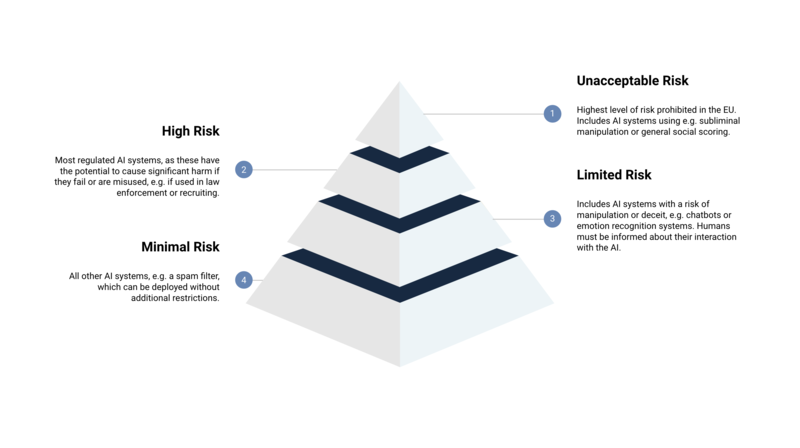
Compliance with GenAI & Conversational AI Security is now more important than ever, and global regulators are now enforcing stringent AI standards. The EU AI Act has now classified AI use cases in businesses, such as credit scoring and recruitment, as “High Risk,” requiring robust data management and comprehensive technical documentation. For businesses and organizations in Switzerland, compliance with these standards is a prerequisite for market access, as FINMA has begun requiring transparency in AI governance. By establishing an audit process for all AI-based decisions, companies can now demonstrate compliance with regulations and build long-term trust with regulators and customers.
Most enterprise GenAI systems are already violating compliance – silently.
Currently, most business leaders are in a “We’ll deal with AI regulation when it’s enforced” mindset, and indeed, most GenAI enterprises have been quietly violating regulations. Practices such as social scoring or manipulating biometric identification have been banned in the EU since the beginning of 2025. If your business or organization operates transnationally, you are required to comply with overlapping regulations such as DORA, GDPR, and the EU AI Act. You can explore more information about EU and Global AI regulations for enterprise in this piece of our articles.
The Cost of Non-Compliance
Penalties for businesses violating AI system security protocols go beyond theory and paperwork. Under the EU AI Act, violations can result in fines of up to €35 million, or 7% of annual global revenue – a penalty even exceeding GDPR. For high-risk AI, non-compliance with governance obligations or a lack of transparency in the system could lead to fines of €15 million. Financial risks are further exacerbated by a series of publicly disclosed data leaks and biased AI decisions.
A prime example is the January 9, 2026 incident where the financial services platform Betterment detected a security breach involving unauthorized access to its third-party communication and marketing systems, resulting in a data breach affecting approximately 1.4 million customer accounts. While the incident did not involve sensitive information such as user account passwords, login credentials, and bank account information, it severely damaged customer trust in Betterment.
5. Building a Roadmap for GenAI & Conversational AI Security
Roadmap for your Mastering Compliance with GenAI & Conversational AI Security
A successful roadmap for GenAI & Conversational AI Security is a technical project with legal requirements, not a legal project with technical annotations. You need to start by creating comprehensive catalogs of all AI systems, including third-party AI tools and “Shadow AI.” Each system needs to be categorized by risk level to determine appropriate compliance steps. By integrating human oversight and audit logging into the initial architectures, businesses can detect “model drift” and ensure their AI remains reliable even as real-world conditions change.
Addressing the Auditability Gap
When a human makes a mistake, there is usually an email trail or a reasoning process that can be reconstructed. When an AI fails, that trail often doesn’t exist. This “Auditability Gap” is one of the most underappreciated risks in deployment. To fix this, organizations must implement logging for every decision, data input, and model version in production. This feedback loop is what allows AI systems to be improved over time rather than becoming a liability.
Leveraging IT Outsourcing for Specialized Security
Insurance companies and banks handling massive volumes of sensitive data are attractive targets for cybercriminals. Security threats often stem from unpatched vulnerabilities or human error during the integration phase. Partnering with a specialized IT Outsourcing (ITO) provider can provide access to cutting-edge encryption and real-time security monitoring. This allows firms to focus on their core business while ensuring their AI infrastructure meets the highest international security standards like ISO 27001.
6. Conclusion
The effective deployment of GenAI & Conversational AI Security is a story of balance between reaching for innovation and maintaining strong governance. The organizations winning with AI in 2026 are not just the ones with the most sophisticated models, but the ones that took data governance, security, and auditability seriously before going to production.
In practice, deploying AI is not only about building models. It is about designing systems that operate safely in real-world environments. As the high-risk enforcement deadlines of the EU AI Act approach, the window to build compliance into your architecture is narrowing fast. At IMT Solutions, AI initiatives are approached from an end-to-end perspective, ensuring systems are secure, compliant, and aligned with business needs. By establishing resilient foundations, we help you unlock AI value responsibly. Contact IMT Solutions today to begin your journey toward trustworthy enterprise AI.
7. FAQ: GenAI & Conversational AI Security
Why does enterprise AI fail in production even if the model is accurate?
AI fails in production because of the systems around the model. Common causes include stale data pipelines, integration friction with legacy systems, and a lack of auditability. Even a perfect model will fail if it encounters unvalidated inputs or lacks human oversight.
What are the main risks of “Shadow AI”?
Shadow AI occurs when employees use unauthorized tools like public chatbots for confidential tasks. This leads to GDPR violations, intellectual property exposure, and reputational risk. Approximately 11% of data pasted into public AI tools is classified as confidential.
Is Switzerland subject to the EU AI Act?
Yes, effectively. While Switzerland is not an EU member, however, the Act applies to any organization whose AI outputs affect people in the EU. Most Swiss banks and software firms serving European markets are within scope.
Does GDPR compliance satisfy the requirements of the EU AI Act?
No. GDPR governs personal data processing, while the AI Act governs how AI systems behave and are overseen. For high-risk AI that handles personal data, both frameworks apply simultaneously, and fines can stack.